
Long after a trip to French Polynesia ends, one fragrance has the power to bring it all back. Warm coconut, delicate white flowers, and the unmistakable scent of the Tiare Tahiti create an aroma that many travellers instantly associate with the islands. This is Monoï de Tahiti—a traditional Polynesian beauty oil that has been used for generations to nourish skin and hair. More than just a souvenir, it is an important part of local culture and one of French Polynesia’s best-known exports.
What Is Monoï de Tahiti?
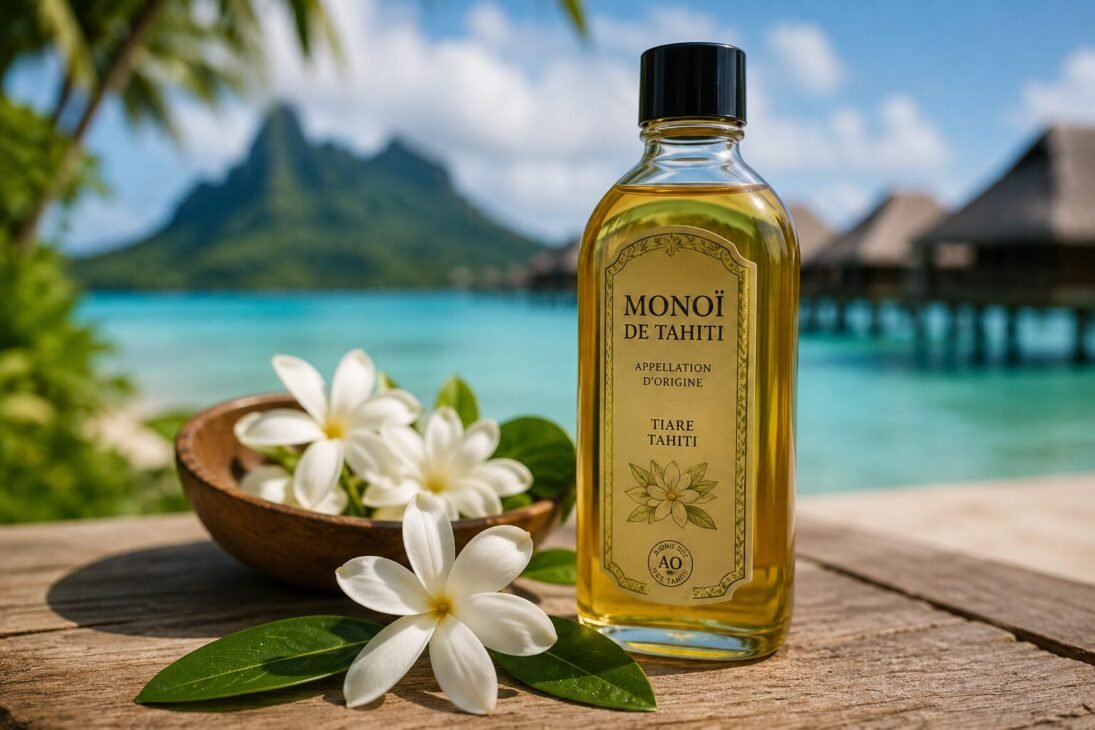
Monoï de Tahiti is created by soaking freshly picked Tiare Tahiti (Gardenia taitensis) flowers in refined coconut oil. During the maceration process, which lasts at least ten days, the flowers naturally infuse the oil with their distinctive fragrance.
Unlike ordinary scented coconut oils, genuine Monoï de Tahiti must be produced entirely in French Polynesia according to strict production standards.
The result is a lightweight, intensely moisturising oil with a naturally floral scent that has become synonymous with the islands.
Protected by Origin
Authentic Monoï de Tahiti is protected by an official Appellation d’Origine (AO), ensuring that every bottle is produced in French Polynesia using traditional methods.
To carry the designation, the oil must:
- Be produced entirely in French Polynesia.
- Use fresh Tiare Tahiti flowers.
- Be made with refined coconut oil produced locally.
- Contain at least ten fresh flowers per litre of oil.
- Macerate for a minimum of ten days.
When shopping, look for the official Monoï de Tahiti AO logo to ensure you’re purchasing an authentic product.
A Tradition Rooted in Polynesian Culture
Long before European explorers reached the Pacific, Polynesians were using monoï as part of everyday life. It moisturised skin after long hours at sea, protected hair from salt water, scented ceremonial occasions, and was used during massage rituals and family celebrations.
Today, monoï remains part of daily life across French Polynesia. Locals continue to use it as an all-purpose body and hair oil, while visitors often discover it during spa treatments or receive it as part of a welcome gift at luxury resorts.
The Tiare Tahiti flower itself is also the national flower of French Polynesia and an enduring symbol of the islands.
How to Use Monoï
As a Body Oil
Apply a small amount to damp skin after bathing or showering to lock in moisture. It absorbs best while skin is still slightly wet, leaving it soft with a subtle satin finish.
As a Hair Treatment
Massage the oil through dry hair from mid-length to the ends—or apply from roots to tips if your scalp is dry. Leave it on for 20 to 30 minutes before shampooing.
Because coconut oil penetrates the hair shaft more effectively than many other plant oils, it can help reduce protein loss and improve softness, particularly after exposure to sun and salt water.
Before or After Sun Exposure
Monoï is an excellent moisturiser before and after spending time in the sun, helping keep skin hydrated in tropical climates.
However, it should never replace a broad-spectrum sunscreen, as it provides little meaningful UV protection.
Massage Oil
Traditional Polynesian massage, known as taurumi, is commonly performed using monoï. Its silky texture and natural fragrance make it an ideal massage oil, whether at a luxury spa or at home.
Natural Fragrance
Many people also use monoï as a lightly scented body oil. Applied to the wrists, neck, or shoulders, it leaves behind the distinctive fragrance of the Tiare Tahiti flower without the intensity of a conventional perfume.
Why Does Monoï Become Solid?
If your bottle turns solid after your flight home, don’t worry.
Pure monoï naturally solidifies below approximately 24°C (75°F) because its base is coconut oil. Simply place the bottle in warm water for a few minutes, and it will return to a clear liquid without affecting its quality.
Where to Buy Monoï in French Polynesia
Authentic Monoï de Tahiti is widely available throughout the islands.
Some of the best places to buy it include:
- Local markets in Papeete
- Pharmacies and beauty shops
- Resort boutiques
- Airport duty-free stores
- Specialty producers throughout Tahiti and the Society Islands
Many brands produce excellent monoï, but choosing one with the official Monoï de Tahiti AO designation guarantees authenticity.
Spa Experiences
Most luxury resorts throughout Bora Bora, Moorea, and Tahiti incorporate monoï into their spa treatments. Polynesian-inspired massages, body wraps, and moisturising rituals frequently feature the oil, allowing visitors to experience one of the islands’ oldest beauty traditions in a relaxing setting.
If you’re visiting a spa during your stay, a traditional Polynesian massage using monoï is well worth experiencing.
Travelling Home with Monoï
Monoï is commonly sold in bottles ranging from 30 ml to 250 ml and larger.
If you’re travelling with hand luggage only, remember that bottles over 100 ml must be packed in checked baggage or purchased after airport security.
Because monoï is classified as a cosmetic product, travellers carrying personal quantities generally do not encounter any special customs requirements in most countries.
A Souvenir That Lasts
French Polynesia offers many memorable keepsakes, from Tahitian pearls and handcrafted pareos to locally grown vanilla.
Monoï, however, is one of the few souvenirs that becomes part of your daily routine. Each time you apply it, the familiar fragrance of coconut and Tiare Tahiti serves as a reminder of warm lagoons, tropical gardens, and time spent in the islands.
Whether purchased from a local market, a boutique, or your resort’s spa, a bottle of authentic Monoï de Tahiti is a simple way to bring a small piece of French Polynesia home.
Honeymoon on Water is the world’s leading editorial directory of luxury overwater villas and bungalows for honeymoon couples.